Security, Human Awareness, and Risk Mitigation in AI-driven Systems
SHIELD-AI 2026 is an interdisciplinary workshop on AI risk management, human–AI interaction,
and human-centered cybersecurity in adversarial and security-critical environments.
Held within ECML PKDD 2026
7–11 September 2026 · Naples, Italy
Workshop Program
Keynote
Beyond the Network: Understanding Cognitive Threats
Daniel Díaz-López, University of Murcia
Paper Presentations · Session I
Paper Presentations · Session II
Lunch Break
Paper Presentations · Session III
Coffee Break
Paper Presentations · Session IV
Round Table
Conclusion & Remarks
About the workshop
Artificial Intelligence systems are increasingly integrated into everyday applications, digital infrastructures, and security-critical environments. While these systems offer significant benefits, they also introduce systemic risks related to technical vulnerabilities, algorithmic bias, integration issues in complex systems, and the dynamics of human–AI interaction.
The workshop is held within ECML PKDD 2026 — the European Conference on Machine Learning and Principles and Practice of Knowledge Discovery in Databases — taking place in Naples, Italy, from 7 to 11 September 2026.
At the same time, modern cyber threats have shifted toward the cognitive domain, exploiting human behavior, social dynamics, and large-scale information ecosystems. Social cyber attacks such as phishing, social engineering, and disinformation campaigns manipulate trust mechanisms, cognitive biases, and online communication patterns.
SHIELD-AI 2026 provides an interdisciplinary forum that brings together researchers and practitioners from machine learning, knowledge discovery, cybersecurity, and human-centered computing. The workshop aims to advance methods for identifying, modeling, and mitigating risks in AI-enabled socio-technical systems operating in adversarial and human-critical environments.
Important dates
12 June 2026
Paper Submission
8 July 2026
Paper Acceptance
Full-day event
Workshop format
Topics of interest
- Risk identification and modeling in AI-driven systems and multi-component ecosystems.
- Human–AI interaction risks, trust, overreliance, and decision-making under automation.
- Human-centered cybersecurity and social cyber attacks, including phishing, social engineering, and disinformation.
- Machine learning and knowledge discovery for cyber threat detection on large-scale heterogeneous data.
- Natural language processing and large language models for malicious or manipulative content analysis.
- Graph learning and knowledge graphs for social networks, communication patterns, and cyber threat ecosystems.
- Bias, robustness, uncertainty, and adversarial machine learning in human-critical settings.
- Explainable and trustworthy AI for security-critical applications.
- Generative AI for both cyber attacks and defensive analysis.
- Runtime monitoring, continual risk assessment, and adaptive mitigation strategies.
- Human behavioral and psychophysiological data analysis.
- Privacy, data protection, cyber threat intelligence, and knowledge sharing.
- Human-in-the-loop and reasoning-based methods for dynamic risk assessment and explanation.
- Case studies and empirical evaluations in real-world deployments.
Submission guidelines
Papers must be written in English and formatted in LaTeX following the Springer LNCS author kit. The maximum length is 16 pages including references. Over-length papers will be rejected without review.
Up to 10 MB of additional material may be uploaded with the submission. Appendices should be submitted separately, and the main paper must remain self-contained within the page limit.
SHIELD-AI 2026 welcomes regular research papers, survey articles, mature work, recent research contributions, preliminary exploratory work, and industry experience or case-study papers. Submissions must be original and not under review elsewhere.
All submissions should be made in PDF via Microsoft CMT and must adhere to the Springer LNCS style. At least one author of each accepted paper must register and present the paper in person in Naples.
The workshop papers may be included in a joint post-workshop proceeding published by Springer Communications in Computer and Information Science (CCIS), with authors able to opt in or out.
How to submit
- Open the submission link here
- Click on "Create New Submission" and select SHIELD-AI 2026 from the list of workshops.
- Fill in the required submission information and upload your manuscript.
Workshop Organizers

Gaetano Cimino
Assistant ProfessorUniversity of Salerno, Italygcimino@unisa.it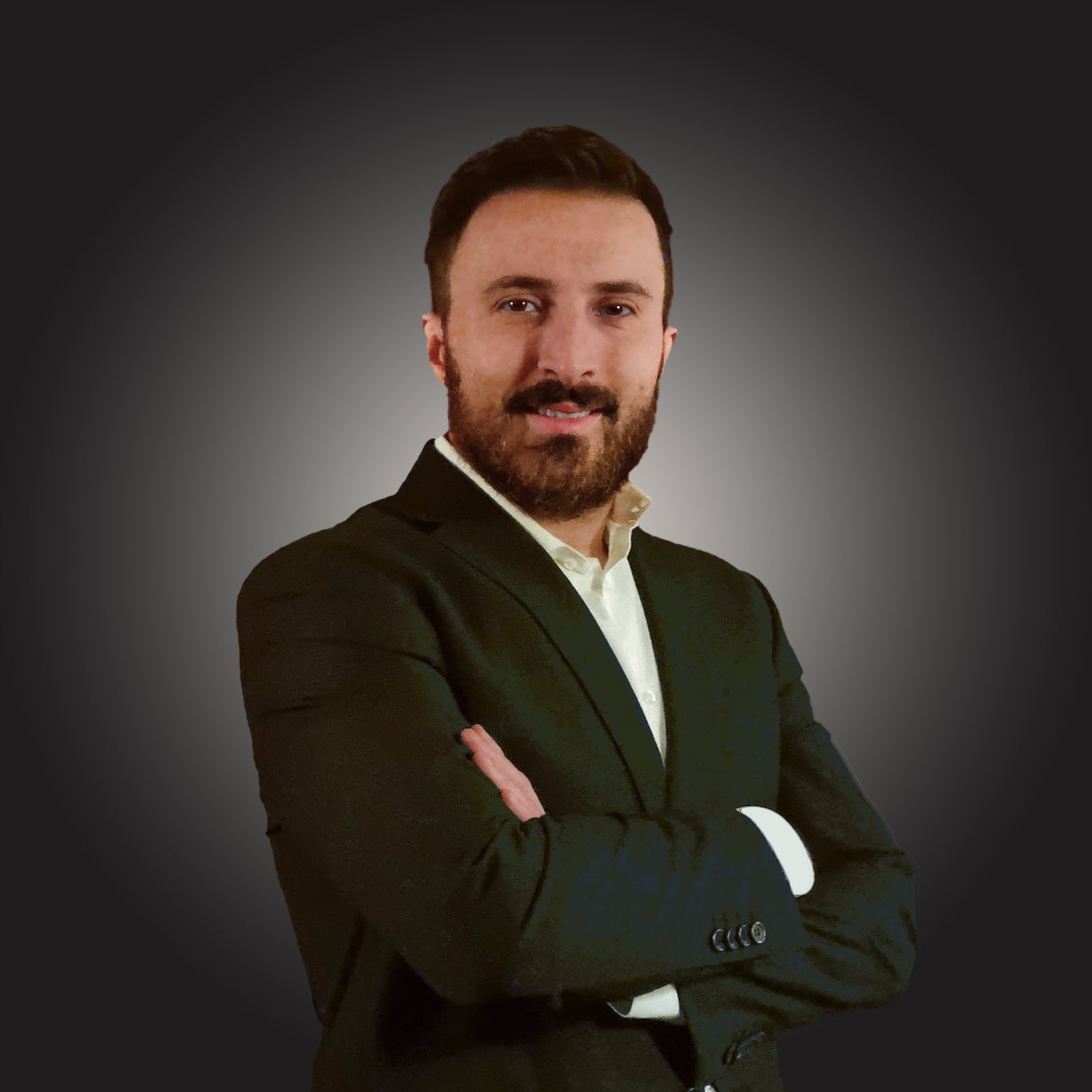
Stefano Cirillo
Assistant Professor (Tenure Track)University of Salerno, Italyscirillo@unisa.it
Miriana Calvano
PhD StudentUniversity of Bari Aldo Moro, Italymiriana.calvano@uniba.it
Giuseppe Desolda
Associate ProfessorUniversity of Bari Aldo Moro, Italygiuseppe.desolda@uniba.it
Idio Guarino
Assistant ProfessorUniversity of Bologna, Italyidio.guarino@unibo.it
Pantaleone Nespoli
Postdoctoral ResearcherUniversity of Murcia, Spainpantaleone.nespoli@um.es
Eliana Pastor
Assistant ProfessorPolytechnic University of Turin, Italyeliana.pastor@polito.it
Gaetano Perrone
Assistant ProfessorUniversity of Naples Federico II, Italygaetano.perrone@unina.it
Roberta Presta
Assistant ProfessorUniversità degli Studi Suor Orsola Benincasa, Napoli, Italyroberta.presta@unisob.it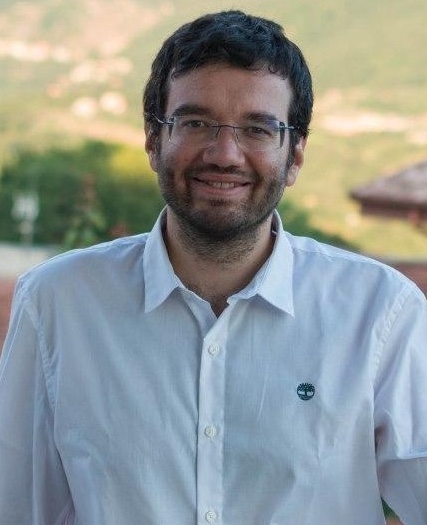
Giancarlo Sperlí
Associate ProfessorUniversity of Naples Federico II, Italygiancarlo.sperli@unina.it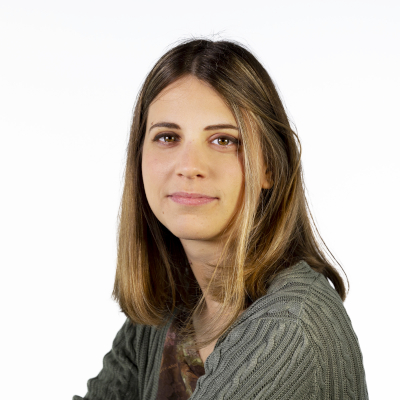
Serena Tardelli
ResearcherIIT-CNR, Pisa, Italyserena.tardelli@iit.cnr.itProgram Committee
- Alessia Antelmi, University of Turin, Italy
- Alfredo Nascita, University of Napoli Federico II, Italy
- Amirhossein Abaskohi, University of British Columbia, Canada
- Andrea Esposito, University of Bari Aldo Moro, Italy
- Andrea Selice, University of Salerno, Italy
- Andrea Vignali, University of Naples Federico II, Italy
- Antonio Curci, University of Bari Aldo Moro, Italy
- Benedetta Tessa, University of Pisa, Italy
- Cesare Tucci, University of Bari, Italy
- Chiara Tancredi, Suor Orsola Benincasa University, Italy
- Christopher Buratti, Università Politecnica delle Marche, Italy
- Daniel Diaz, University of Murcia, Spain
- Davide Traini, Unimore, Italy
- Domenico Desiato, University of Bari Aldo Moro, Italy
- Eleonora Poeta, Politecnico di Torino, Italy
- Enrique Tomás Martínez Beltrán, University of Murcia, Spain
- Federica Parlapiano, Università Politecnica delle Marche, Italy
- Flavia De Simone, Università Suor Orsola Benincasa, Napoli, Italy
- Francesco Greco, University of Bari, Italy
- Giampaolo Bovenzi, Pegaso Telematic University, Italy
- Giancarlo Sperlì, University of Naples Federico II, Italy
- Giandomenico Solimando, University of Salerno, Italy
- Gianluca Bonifazi, Università Politecnica delle Marche, Italy
- Gianpaolo Iuliano, Centre National de la Recherche Scientifique CNRS, France
- Giovanni Stanco, UNINA, Italy
- Giulia Quaglieri, Università Politecnica delle Marche, Italy
- Gizem Gezici, Scuola Normale Superiore, Italy
- Idio Guarino, University of Bologna, Italy
- Jose Maria De Fuentes, Universidad Carlos III de Madrid, Spain
- Laura DE SANTIS, Università degli Studi di Salerno, Italy
- Lorenzo Alvisi, IMT Lucca-CNR Pisa, Italy
- Lorenzo Mannocci, University of Pisa, Italy
- Luca Virgili, Università Politecnica delle Marche, Italy
- Luigi Di Biasi, University of Salerno, Italy
- Mafalda Ingenito, University of Salerno, Italy
- Manuel Gil, University of Murcia, Spain
- Marco Cominelli, Politecnico di Milano, Italy
- Mariano Albaladejo González, University of Murcia, Spain
- Mario Quiles Perez, University of Murcia, Spain
- Mario Varlese, Federico II, Italy
- Martino Ciaperoni, Scuola Normale Superiore, Italy
- Matteo Mantovani, University of Verona, Italy
- Mir Rayat Imtiaz Hossain, University of British Columbia, Canada
- Mohamed Siala, LAAS-CNRS, France
- Nicola Bena, Università degli Studi di Milano, Italy
- Nicolò Romandini, University of Bologna, Italy
- Paulo Serafim, Gran Sasso Science Institute, Italy
- Pedro Beltrán-López, University of Murcia, Spain
- Roberto Stanzione, Inria, France
- Saikat Mondal, IIT Jodhpur, India
- Stefania Zinno, University of Naples Federico II, Italy
- Vagelis Plevris, Qatar University, Qatar
- Vita Santa Barletta, University of Bari Aldo Moro, Italy
- Weiwei Jiang, Beijing University of Posts and Telecommunications, China